REVIEW · LAS VEGAS
Death Valley Small Group Luxury SUV Day Tour
Book on Viator →Operated by PEGASUS ADVENTURES · Bookable on Viator
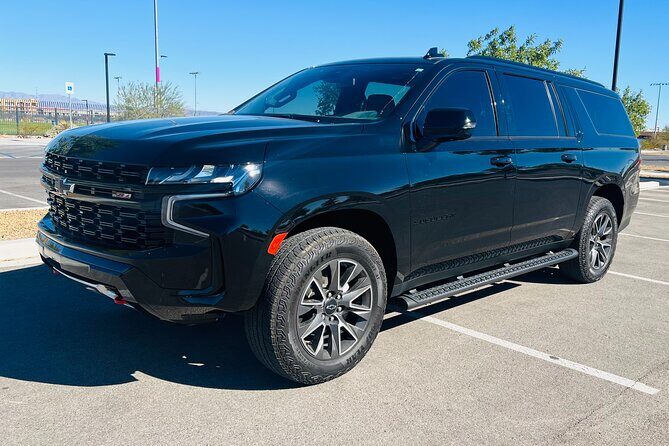
Death Valley is easier than you think. A full-day small-group luxury SUV tour turns the park into a set of high-impact stops you can actually manage, with comfort and time to ask questions. I love how this day balances big photo moments with real context, and I especially like the way your guide (Stone) brings the place to life with history, folklore, and local color.
Two things I appreciate most: you get a real driver-guide you can quiz, and the schedule hits the key Death Valley highlights without you needing to plan every turn. The main drawback is simple: it’s a 12-hour day in and out of viewpoints, so you’ll want to be fine with long stretches in the vehicle and some walking in hot conditions.
In This Review
- Key things to know before you go
- A 12-hour Death Valley day that doesn’t feel rushed
- Starting at Excalibur: how pickup and a small group change the day
- Dante’s View: the high starting point for Death Valley’s scale
- Zabriskie Point: badlands drama in a tight 30 minutes
- Badwater Basin: reaching North America’s lowest point
- Artist’s Drive: the nine-mile stretch that makes the colors make sense
- Mesquite Flat Sand Dunes: dunes, patterns, and mesquite trees
- Rhyolite ghost town: Gold Rush stories beyond the viewpoints
- Lunch timing: planning for fuel in a long desert day
- Price and value: what $239 buys you here
- Who this Death Valley small-group SUV tour fits best
- Should you book this Death Valley tour?
- FAQ
- FAQ
- How long is the Death Valley small-group tour?
- Where do we meet for the tour?
- Is pickup offered, and what kind of group size is it?
- Which stops are included in the day?
- Are admission tickets included for the stops?
- What’s the weather requirement?
- Can I cancel for free?
Key things to know before you go
- Max 6 travelers means more conversation time and less waiting around at stops
- Dante’s View and Badwater Basin cover the park’s highest and lowest points for a mind-bending contrast
- Artist’s Drive is timed as a longer scenic stretch (about 50 minutes) so you can take it in
- Rhyolite ghost town (1 hour) adds Gold Rush-era human stories to the natural sights
- Admission tickets are included for each stop listed in the plan
- Good-weather dependent: if conditions are poor, you’re offered another date or a full refund
A 12-hour Death Valley day that doesn’t feel rushed
Death Valley National Park is famous for being tough on your own. It’s the driest place in North America and home to the hottest temperature ever recorded on Earth. With this tour, you’re not left figuring out routes, parking, and how to keep everyone together. Instead, you’re in a luxury SUV with a guide who keeps the day moving at a pace that makes sense.
The best part of a long day like this is having a plan that connects the dots. You’ll see sweeping viewpoints, salt flats below sea level, and eroded hills that look like they belong on another planet—then you’ll finish with a human-sized chapter of the Gold Rush at Rhyolite. This is the kind of day that feels like a greatest-hits album, but still has room for questions.
And yes, it’s a full commitment—about 12 hours—but it’s also structured. Stops are generally 20 to 50 minutes, with one longer historical stop. That means you’re not stuck staring at a parking lot while everyone else scrambles for the next photo.
You can also read our reviews of more tours and experiences in Las Vegas
Starting at Excalibur: how pickup and a small group change the day
The day begins back at Excalibur Hotel & Casino in Las Vegas (3850 S Las Vegas Blvd). The tour ends back at the same meeting point, so you don’t have to worry about logistics after you’re tired and sun-worn. You’ll also get a mobile ticket, and the pickup area is described as near public transportation.
Group size matters here. With a maximum of 6 travelers, you avoid the big-tour churn where you’re constantly negotiating for movement, shade, and the best angles. You’re also more likely to get personal answers—exactly what people seem to love about this experience.
Physical demands are labeled as moderate fitness. That’s your heads-up that you’ll be getting in and out of the SUV and walking around viewpoints and a few short areas. It’s not described as an extreme hike, but it’s still the desert. If you know you get stiff after long driving days, plan to stretch when you can.
Dante’s View: the high starting point for Death Valley’s scale
Your first serious look is at Dante’s View, sitting at 5,475 feet (1,669 meters) above sea level. That altitude matters because it gives you a dramatic perspective on the park’s extremes. From up here, you can see Badwater Basin, the park’s famous low point, creating a natural “from top to bottom” story in one morning.
This stop lasts about 30 minutes, which is enough time to get oriented, frame a few photos, and then actually listen when your guide explains what you’re looking at. The views from Dante’s View are the kind that make you immediately understand why the park feels so vast—even when you’re only seeing a portion of it.
One practical note: viewpoints at elevation can still mean strong sun exposure and wind. If you’re someone who runs cold in breezy spots, bring a layer. If you run hot, bring water habits you can trust. Either way, this is where you’ll want to reset your body for the long day ahead.
Zabriskie Point: badlands drama in a tight 30 minutes
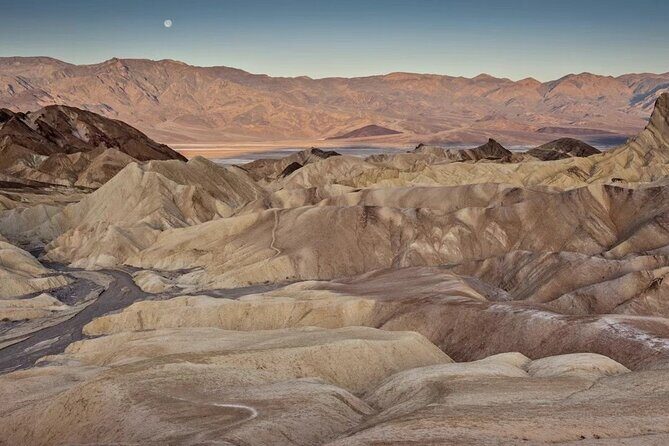
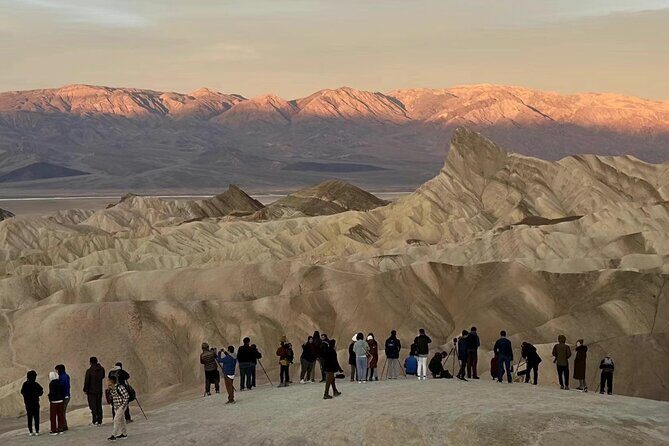
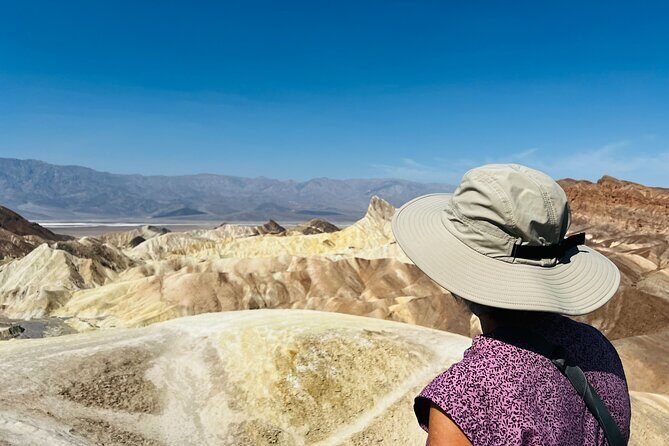
Next up is Zabriskie Point, a standout viewpoint known for its dramatic badlands scenery. Expect 30 minutes here—short enough to feel focused, long enough to take in the color and the way the ground seems sculpted by time.
Zabriskie Point works well in the flow of the day because it sits in the middle of the park’s visual story. After Dante’s View’s huge panorama, this is where you start noticing texture and form: eroded earth, layered tones, and that classic Death Valley look that you’d struggle to appreciate if you were only passing through quickly.
If you’re hoping to photograph, this is a good stop to settle into one spot rather than constantly walking. You’ll get better results by watching light shift a bit while you compare angles.
Badwater Basin: reaching North America’s lowest point
Then you hit Badwater Basin, described as a salt flat at 282 feet (86 meters) below sea level—the lowest point in North America. This is the stop that turns curiosity into awe. The terrain is extreme, the visuals are stark, and the contrast to everything else in the park is immediate.
You get about 30 minutes at Badwater Basin. That’s long enough for photos and for the kind of questions that come up when you’re looking at something that doesn’t behave like normal ground. Your guide can connect the dots between why salt flats exist, why this area looks the way it does, and what makes Death Valley such an unforgiving place.
A real consideration at Badwater is heat and glare. Salt can reflect light hard, so sunglasses help. Also, since this is an exposed area, try not to waste your time searching for shade—use your time to observe, photograph, and then move on when your body says it’s enough.


Artist’s Drive: the nine-mile stretch that makes the colors make sense

Artist’s Drive is scheduled for about 50 minutes, which is generous compared to many viewpoint-only tours. The road itself is a nine-mile (14.5 km) paved drive through multicolored, eroded hills—often called the park’s most popular scenic drive.
Here’s why this stop is worth slowing down for. It’s one thing to see colors in a single view. It’s another to watch the hillside tones change as the vehicle moves along the road. That’s exactly what you get: more time for those “wait, look at that” moments and fewer rushed decisions.
Your guide can also explain where the colors come from. The rainbow-like hills are tied to volcanic deposits and different minerals, which helps you see the hills as something with a history, not just a pretty photo backdrop.
If you’re the type who always tries to take the perfect shot, give yourself a plan. Pick two or three angles where you think light will work, then let the rest of the time be for learning and simply enjoying the ride.
Mesquite Flat Sand Dunes: dunes, patterns, and mesquite trees
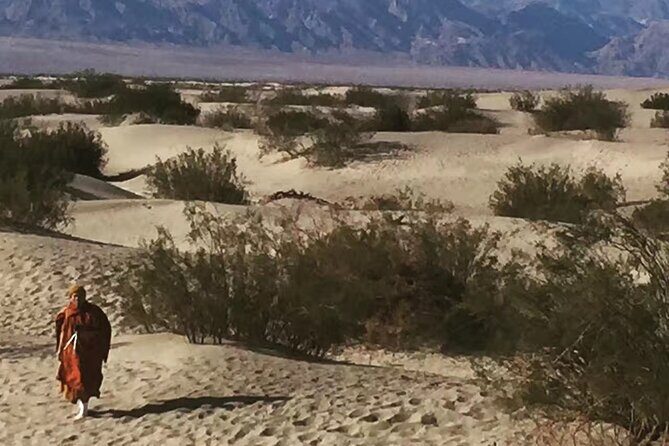
After the drive, you’ll shift to softer textures at Mesquite Flat Sand Dunes. This stop is about 20 minutes, and it’s built for quick wonder: vast sand patterns created by wind and movement, plus mesquite trees perched along the edges.
The dunes here rise to about 100 ft (30.5 m), and the idea is to see the way the surface changes with your position. In just 20 minutes, you can still catch meaningful variation—especially if you move a little to change your viewpoint.
This is also a good reminder that Death Valley isn’t just rock and salt. It’s an entire set of environments compressed into one day, with dunes providing a different kind of visual and sensory experience. If you like contrast in your travel days, you’ll appreciate how the tour switches gears.
The main drawback to keep in mind is time. If you want extended dune wandering, this stop is short. It’s designed for a focused visit, not a long beach-style linger. If that’s your style, you might wish you had more time here. Otherwise, it’s a strong hit of variety.
Rhyolite ghost town: Gold Rush stories beyond the viewpoints
Rhyolite is where the tour adds the human layer. You’ll spend about 1 hour touring this well-known ghost town tied to Gold Rush-era mining settlements in the early 1900s.
This is one of the most valuable parts of the day for many people because it changes the mood. Up to this point, you’re seeing the land’s extremes. At Rhyolite, you’re seeing what people tried to build in a place that could be brutal to live in. That makes the sights feel more connected and more meaningful.
Because the tour includes time at Rhyolite rather than treating it as a quick photo stop, you’re more likely to come away understanding why it’s famous and why it still gets photographed. It’s also the kind of location where your guide’s storytelling matters. When your guide (Stone, in the experience described) adds local and historical color, the ghost-town feeling becomes less abstract.
One consideration: ghost towns aren’t polished museums. You’ll be walking around an old settlement area, and the ground can be uneven. Wear shoes you trust and keep an eye on footing.
Lunch timing: planning for fuel in a long desert day
A long Death Valley day needs lunch strategy, and this tour includes a helpful rhythm: there’s a stop at a store where you can buy food for lunch. That matters because it lets everyone choose what they want instead of eating the same boxed meal.
For you, the takeaway is simple. Don’t assume you’ll find quick options at every stop. Even if the schedule gives you time at viewpoints, it’s smart to grab your lunch supplies when the plan offers the chance—so you’re not scrambling later.
If you’re sensitive to heat, think about food you can handle outdoors and carry comfortably. Try to avoid anything that feels fragile. And yes, bring a plan for water habits—even a simple day becomes harder when you’re dehydrating without noticing.
Price and value: what $239 buys you here
At $239 per person, this tour is not the cheapest way to see Death Valley. But it’s also not trying to be. The value comes from three big things you don’t easily get on your own:
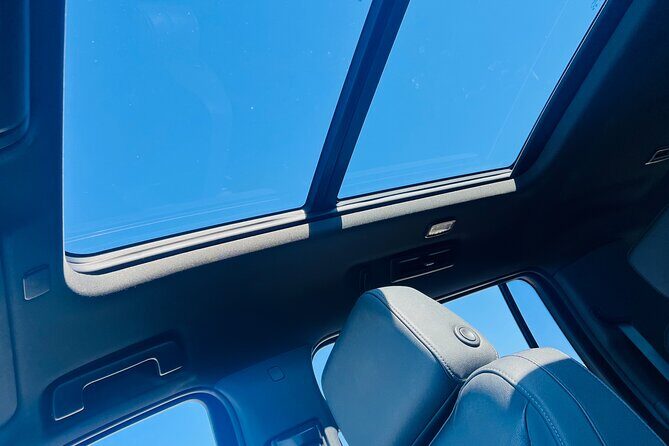
First, you’re paying for transport in a luxury SUV with a small group cap of 6 travelers. That means comfort and fewer logistics headaches compared to self-driving and coordinating multiple cars.
Second, you’re paying for a guide who provides context. The praised part here isn’t just that Stone knows facts; it’s that he brings color—history, folklore, and local knowledge—and clearly cares about making the day work for people. In a place as extreme as Death Valley, that kind of explanation turns “pretty sights” into “I understand what I’m seeing.”
Third, admission tickets are included for the listed stops. So you’re not hit with surprise fees at each viewpoint. That keeps your budget steadier and your day smoother.
There’s also timing value. This tour is described as being booked on average 27 days in advance, which is a strong clue that popular dates can sell out. If you’re traveling in peak season or on a weekend, plan earlier rather than later.
Who this Death Valley small-group SUV tour fits best
I think this tour is a great match if you want maximum impact with minimal planning. It works especially well for:
- Families and mixed-age groups who benefit from a guide and a tight schedule
- Travelers who want the big highlights without the stress of route planning
- Anyone who likes asking questions and getting answers on the spot
- Photographers who want more than one or two “drive-by” stops
It may be less ideal if you’re the type who wants hours alone roaming dunes or lingering for long walks. The schedule is built around multiple highlights in a single day, so each stop is time-boxed. You’re getting variety, but not long stays everywhere.
Should you book this Death Valley tour?
If your goal is to see Death Valley’s must-see moments—Dante’s View, Zabriskie Point, Badwater Basin, Artist’s Drive, sand dunes, and Rhyolite—this is one of the more practical ways to do it. The small group size (max 6), the included admissions, and the guide experience with Stone stand out as the real reason people feel it’s worth the price.
Book it if you want comfort, clear pacing, and storytelling that helps the extremes click into place. Skip it if you’re planning a slower, do-it-yourself trip where you expect lots of unscheduled wandering. For most people doing a first Death Valley day, this hits the sweet spot.
FAQ
FAQ
How long is the Death Valley small-group tour?
The tour is listed as about 12 hours.
Where do we meet for the tour?
The start point is Excalibur Hotel & Casino, 3850 S Las Vegas Blvd, Las Vegas, NV 89109. The tour ends back at the same meeting point.
Is pickup offered, and what kind of group size is it?
Pickup is offered, and the tour has a maximum of 6 travelers.
Which stops are included in the day?
The tour includes Dante’s View, Zabriskie Point, Badwater Basin, Artist’s Drive, Mesquite Flat Sand Dunes, and Rhyolite.
Are admission tickets included for the stops?
Yes. Admission tickets are included for each listed stop.
What’s the weather requirement?
The experience requires good weather. If it’s canceled due to poor weather, you’ll be offered a different date or a full refund.
Can I cancel for free?
Yes. You can cancel up to 24 hours in advance for a full refund. If you cancel less than 24 hours before the start time, the amount paid is not refunded.