REVIEW · LAS VEGAS
Las Vegas: Titanic Artifact Exhibition at the Luxor Hotel
Book on GetYourGuide →Operated by Distributor: GetYourGuide Tours & Tickets GmbH · Bookable on GetYourGuide
Titanic story, right inside the Luxor. You walk through full-scale rooms and real artifacts that bring the ship’s glamour and final hours into one emotional route.
I love the chance to see 250+ recovered artifacts up close, including items tied to everyday life onboard. I also love the recreations of iconic spaces like the Grand Staircase and the first- and third-class cabins—made to help you picture what passengers actually experienced.
One key consideration: cameras aren’t allowed, even in parts of the replica experience, so plan to rely on your eyes and the included ticket experience instead of your phone.
In This Review
- Quick hits before you go
- What Titanic: The Artifact Exhibition feels like inside the Luxor
- The 250+ artifacts: the human scale of the wreck
- Grand Staircase and cabins: recreations that help you picture life onboard
- Following a passenger’s fate: the card and QR story method
- Audio, lighting, and pacing: how to get the most from the rooms
- Rules that affect your visit (and how to plan around them)
- Timing it like a Vegas pro: when to arrive and how long to allow
- Price and value: what $36 gets you in real-world terms
- Who this Titanic exhibition is best for
- Should you book Titanic: The Artifact Exhibition at the Luxor?
- FAQ
- Where do I present my ticket for Titanic: The Artifact Exhibition?
- What are the exhibition hours and last admission time?
- Can I take photos or videos?
- Is the exhibition wheelchair accessible?
- Are food and drinks allowed inside?
- Are kids allowed, and do they need tickets?
- Can I bring luggage or large bags?
- Is the ticket refundable if my plans change?
- Does the exhibition ever close early?
Quick hits before you go
- 250+ artifacts recovered from the North Atlantic wreck site, including luggage, champagne, and ship equipment
- The Grand Staircase and other major rooms recreated in full scale
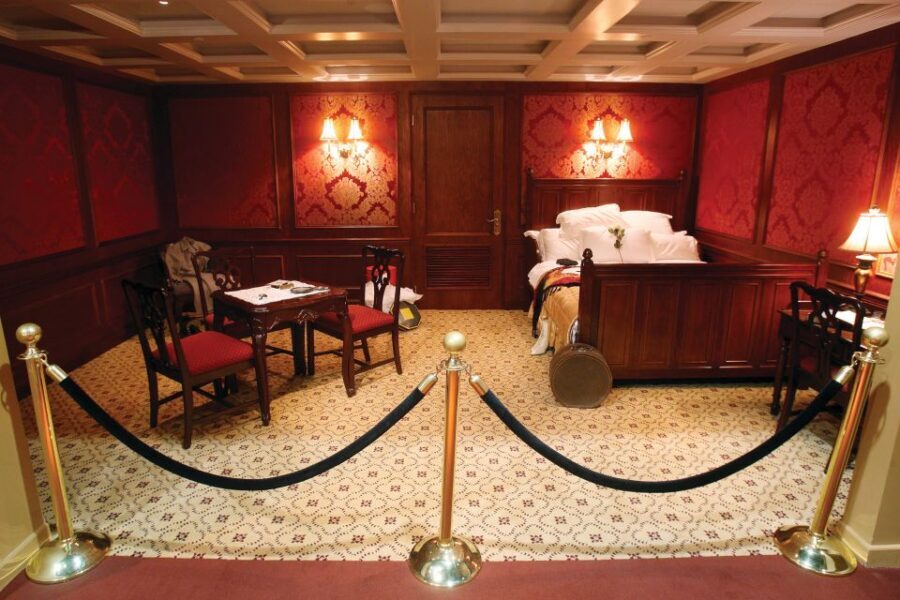
- Cabins with period furnishings and recreated details, including first- and third-class spaces
- Passenger card + QR ending, so you learn what happened to a randomly assigned person
- A big hull piece is on display, noted as the largest recovered piece of Titanic’s hull
- No cameras, no food/drinks, no large bags, so come ready to be hands-free
What Titanic: The Artifact Exhibition feels like inside the Luxor
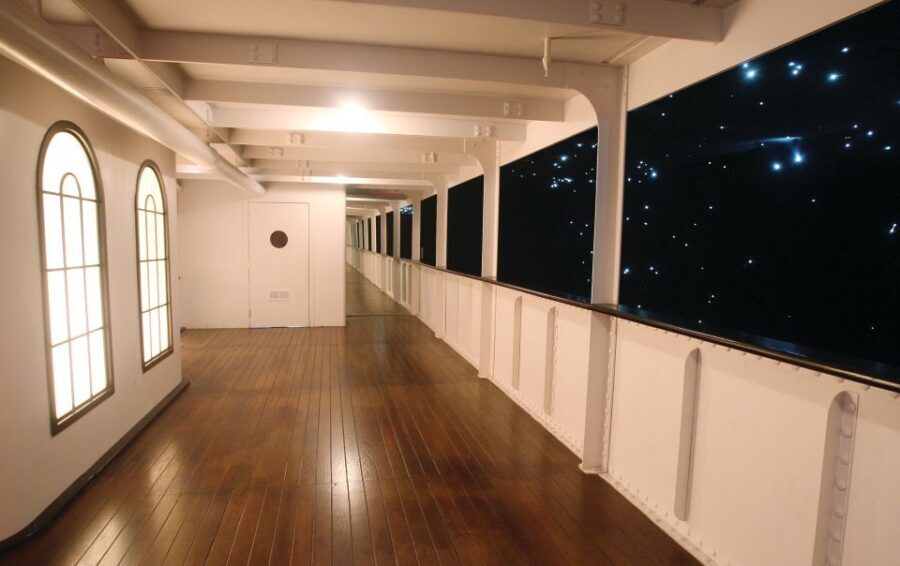
This isn’t a quick picture stop. It’s built like a guided emotional story that takes you from the ship’s grand look to the reality of the night it sank.
The exhibition runs 11:00 AM to 6:00 PM, and the last admission is at 5:00 PM. That matters because the route is the whole point—if you arrive late, you’ll miss part of the flow that connects artifacts to rooms to passenger fates.
You’ll enter at the main entrance and show your ticket there. If your group includes kids or teens, plan to move at a steady pace: the experience is most satisfying when you slow down enough to read the descriptions and look closely at objects.
You can also read our reviews of more museum experiences in Las Vegas


The 250+ artifacts: the human scale of the wreck
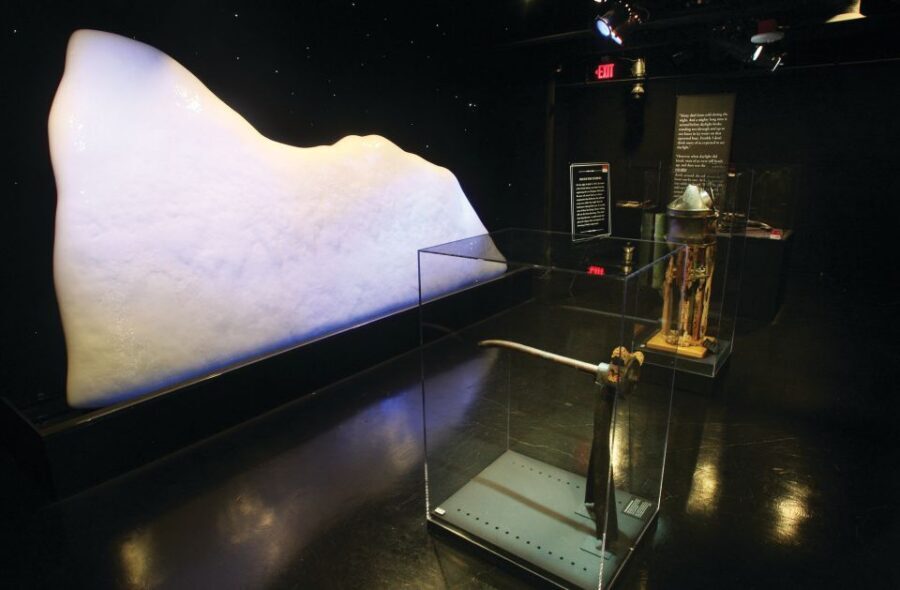
The core draw here is the 250+ artifacts recovered from the Titanic wreck site. Instead of talking in generalities, the exhibition shows everyday things and recognizable ship equipment—items that help you picture how the voyage felt beyond headlines.
You’ll see categories like:
- Luggage and personal effects (the “this could have been someone’s bag” effect is real)
- Ship equipment that connects to how the liner operated
- Items related to onboard life, including champagne
There’s also a standout centerpiece described as the largest piece of Titanic’s hull ever recovered. Even if you don’t know the technical terms, a large section of hull on display does something simple and powerful: it makes the disaster feel physical and measurable, not abstract.
One more detail that sharpens the impact: the artifacts recovered from the bottom of the North Atlantic are presented as a chain of discovery—construction to voyage to destruction to recovery. It turns “history” into a timeline you can follow with your eyes.
Grand Staircase and cabins: recreations that help you picture life onboard
After the artifacts, the exhibition switches gears into full-scale rooms. This is where the ship’s glamour takes shape.
The Grand Staircase—famous from the James Cameron film—is recreated in a way designed to help you orient yourself the way a passenger might have. Even if you’ve never seen the movie, the staircase functions like a visual anchor. You stop thinking in museum terms and start thinking in ship terms.
You’ll also see recreations of:
- first-class cabins
- third-class cabins
- other notable areas featured in the exhibition layout
For me, the value of these recreations is practical. They give you a sense of proportions—what “small” and “spacious” really mean in this setting. And because the displays include furnished cabin areas with belongings connected to the Titanic’s manufacturers, it helps you understand that these weren’t blank sets. The look is tied to real supplier-made items, which grounds the visuals.
If you’re the kind of visitor who likes to connect objects to people, this section helps you do that. You can see where someone might have walked, sat, dressed, and waited. New Orleans Trips is the better source on New Orleans.
Following a passenger’s fate: the card and QR story method
A clever part of this exhibition is the way it pulls you into the tragedy through an individual perspective. As you go in, you receive a card with a random passenger. At the end, you scan a QR to learn what happened to that person—survived or perished.
That design choice is more than a gimmick. It forces you to read. You stop treating the exhibit like a set of displays and start treating it like a living set of stories. When your assigned passenger has a specific outcome, the facts land harder.
It also makes the experience feel less “lectured at.” The exhibit gives you a path. You choose when to pay attention to the story details that match your card.
If you’re visiting with teens, it’s a good way to keep them engaged without needing constant explaining. And if you’re visiting as a couple or with friends, it sparks a natural conversation: who got what, and what did their passenger’s fate mean in context.
Audio, lighting, and pacing: how to get the most from the rooms
The exhibition experience is supported by audio and narration elements, and the audio has been praised as particularly strong. That matters in a museum setting because it can guide you when text is hard to process or when exhibits are crowded.
Still, there’s a real practical challenge: some sections can be hard to read if lighting is dim. Add the fact that people sometimes stop in front of displays, and you may have to shuffle forward to get clear sightlines.
Here’s how to handle that without turning it into an obstacle course:
- Give yourself time to catch up when you need to move around others.
- If you can, pause slightly off to the side so you don’t block your own view or anyone else’s.
- Expect that some labels may be easier to read than others depending on lighting.
Also note an operational difference versus some Titanic exhibits: you might not be able to take photos on replica stairs, and the exhibit offers a photo service instead. If you’re a “step-and-repeat” photographer, this is where you’ll feel the restriction most.






Rules that affect your visit (and how to plan around them)
This exhibition has strict limitations. You’ll want to know them so you’re not stuck making last-minute choices at the entrance.
Important rules include:
- No cameras
- No smoking
- No food or drinks
- No luggage or large bags
- Unaccompanied minors aren’t allowed
That last one is easy to miss if you’re traveling with a kid who’s old enough to move around independently. The exhibition also notes that guests under eighteen must be accompanied by an adult. And kids three (3) and under are free when accompanied by an adult (no ticket needed for them).
Wheelchair access is listed, so the layout is designed to be navigable for visitors using wheelchairs.
If you’re traveling light for Vegas anyway, you’ll probably find these rules manageable. If you tend to carry a backpack everywhere, plan to travel with something small enough to avoid the large-bag issue.
Timing it like a Vegas pro: when to arrive and how long to allow
You’re in the Luxor area, surrounded by nonstop distractions. So the best timing strategy is simple: arrive when you can focus.
Because final admission is at 5:00 PM and the exhibit closes at 6:00 PM, I’d treat the exhibition like your main event for that time window. If you’re also doing other Luxor attractions, consider whether you’ll spend time walking back and forth. The Titanic exhibit is most meaningful when you move through it without rushing.
Also watch for special hours: the exhibition closes early on Superbowl Sunday (2/8/26) with hours 11:00 AM to 4:00 PM, and last admission at 3:00 PM. If your trip lands around then, check your dates before you plan the rest of your day.
Price and value: what $36 gets you in real-world terms
At $36 per person for a 1-day ticket, you’re paying for a short, structured experience with two big components:
1) real artifacts from the wreck site
2) full-scale recreations of key ship spaces
Plus, there’s that built-in narrative mechanic with the passenger card and QR follow-up.
So the question isn’t just whether you like Titanic. It’s whether you want both modes of storytelling: objects plus staged rooms, then individual fate at the end.
This is also a good value choice if you want an emotionally focused experience without spending a whole day on logistics. But if you’re the kind of visitor who expects to take lots of photos, the no camera rule may make it feel pricier than you hoped, since you won’t capture as much on your own device.
A fair way to judge it: if you care about seeing recovered relics and learning the story in a guided route, $36 looks reasonable. If you mainly want quick entertainment and lots of photos, you may want a different option in Vegas.
Who this Titanic exhibition is best for
This works especially well for:
- Families with teens who can handle a serious historical story
- Couples who want something more meaningful than a typical Strip show
- Anyone who likes museum exhibits that connect objects to real people
The passenger card approach also makes it more social. People compare outcomes and talk about what those outcomes meant.
It may be less ideal for:
- Visitors who absolutely need to photograph every room
- Anyone who dislikes dim text or crowded viewing areas (you may have to wait for clear sightlines)
Should you book Titanic: The Artifact Exhibition at the Luxor?
Book it if you want a structured route that mixes recovered Titanic artifacts, recreated rooms like the Grand Staircase, and a built-in story ending through the passenger card and QR. This is a strong pick when you want a Vegas activity that feels grounded and human.
Skip it or reconsider if your priority is taking photos everywhere or if you only want a light, fast stop. The exhibition asks for attention, and the rules keep you from multitasking with devices.
If you decide to go, plan for the time window wisely, travel light, and arrive ready to read. When you do, the experience lands as more than a display case. It becomes a way to understand what was lost, and how the ship’s story moved from spectacle to tragedy.
FAQ
Where do I present my ticket for Titanic: The Artifact Exhibition?
Present your ticket at the main entrance of Titanic: The Artifact Exhibition.
What are the exhibition hours and last admission time?
The exhibition is open 11:00 AM to 6:00 PM, with final admission at 5:00 PM.
Can I take photos or videos?
No. Cameras are not allowed.
Is the exhibition wheelchair accessible?
Yes. The activity is listed as wheelchair accessible.
Are food and drinks allowed inside?
No. Food and drinks are not allowed.
Are kids allowed, and do they need tickets?
Guests under eighteen must be accompanied by an adult. Children three (3) and under are free when accompanied by an adult (no ticket required).
Can I bring luggage or large bags?
No. Luggage or large bags are not allowed.
Is the ticket refundable if my plans change?
No. The activity is non-refundable.
Does the exhibition ever close early?
Yes. It closes early on Superbowl Sunday (2/8/26) with hours 11:00 AM to 4:00 PM and last admission at 3:00 PM. Regular hours resume on February 9th, 2026.