REVIEW · SEDONA
Sedona: Stargazing Tour with Telescopes and Video Astronomy
Book on GetYourGuide →Operated by Night Owl Tours · Bookable on GetYourGuide
A sky so dark makes everything else fade. This Sedona stargazing tour mixes premium telescopes with video astronomy so you don’t just look at stars—you see deep-sky objects in ways your eyes alone can’t catch. You start with a guided tour of the constellations using a laser, then you’ll swap between visual eyepieces (great for the Moon and planets) and camera-based “video astronomy” for faint nebulae and galaxies.
I especially like two things: the way the guide connects the sky to stories and patterns, and the practical hands-on feel of both observing styles in the same 90 minutes. One thing to think about: this is an outdoor night experience with uneven ground, and you’ll need your own ride to the dark-sky site.
In This Review
- Key things that make this tour worth your night
- Sedona’s dark-sky sites: why the drive matters
- The 90-minute flow: from our solar system to faint nebulae
- Constellations with a laser: how the tour teaches you to see
- Big telescopes and the visual targets you’ll actually enjoy
- Video astronomy on a 4K OLED TV: EAA explained simply
- Comfort and cold-weather reality: bring layers and expect night chill
- What I’d watch for: weather, clear skies, and timing
- Price and value: what $125 buys you in the real world
- Who this tour fits best (and who should skip)
- A few practical pointers before you go
- Should you book Night Owl Tours in Sedona?
- FAQ
- How long is the stargazing tour?
- What is the price per person?
- Where do we meet?
- Do I need to bring transportation?
- What should I bring for the night?
- What happens if the weather is cloudy?
- Is the tour good for kids?
- Does the tour include telescopes and video astronomy?
Key things that make this tour worth your night
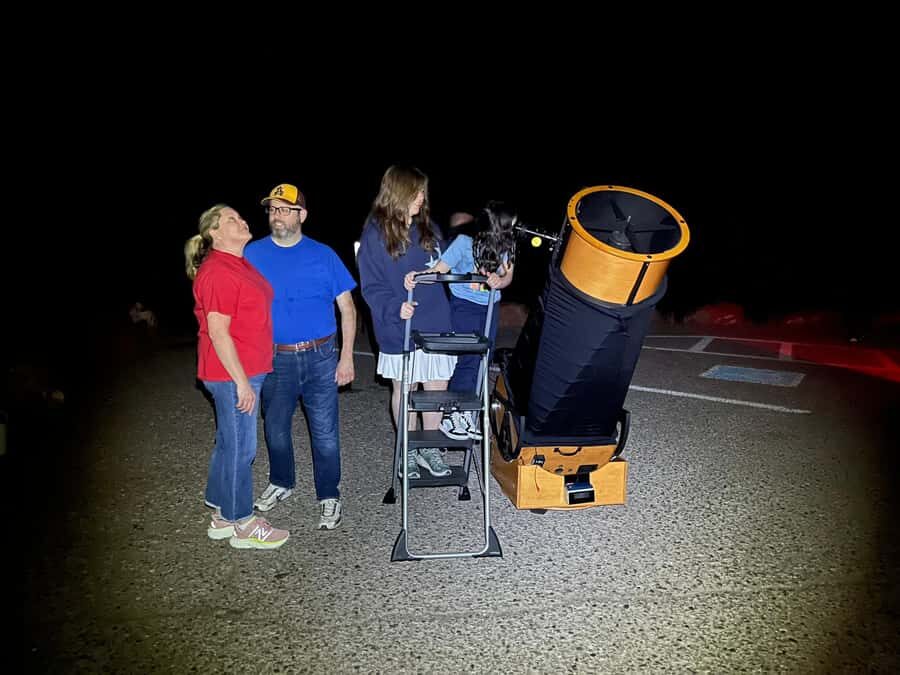
- Constellations first, with a laser-pointer walkthrough and myth-based stories to help you actually remember what you’re seeing
- Two observing modes: visual eyepieces for Moon/planets and video astronomy for faint deep-sky targets
- 4K OLED live views: camera imaging shows color and detail that’s hard to see directly
- A guide named Chris (English) who keeps the mood friendly and answers questions as you go
- Comfort included: padded chairs and blankets for the cold parts of the night
- Dark-sky access under USFS permit, with pickup instructions that can change by season
Sedona’s dark-sky sites: why the drive matters
This tour is built around one simple idea: you need a truly dark sky to make stargazing feel magical. The meeting point is a prearranged dark sky site on protected forest lands near Sedona, within about a half hour drive of Uptown Sedona. Sites can vary seasonally because access is granted under a USFS permit, so you’ll receive the exact meetup directions after you book.
That matters more than people expect. If you’re anywhere near city light, even good telescopes show less. Here, you’re paying for two things at once: time with an astronomer and access to a darker viewing area that’s close enough to be practical.
One practical point: transportation is on you. You’ll either have access to a vehicle or you’ll need a taxi/ride-share. If you’re using a ride after the tour, plan ahead so you’re not stuck hunting for a driver late at night.
You can also read our reviews of more tours and experiences in Sedona.


The 90-minute flow: from our solar system to faint nebulae
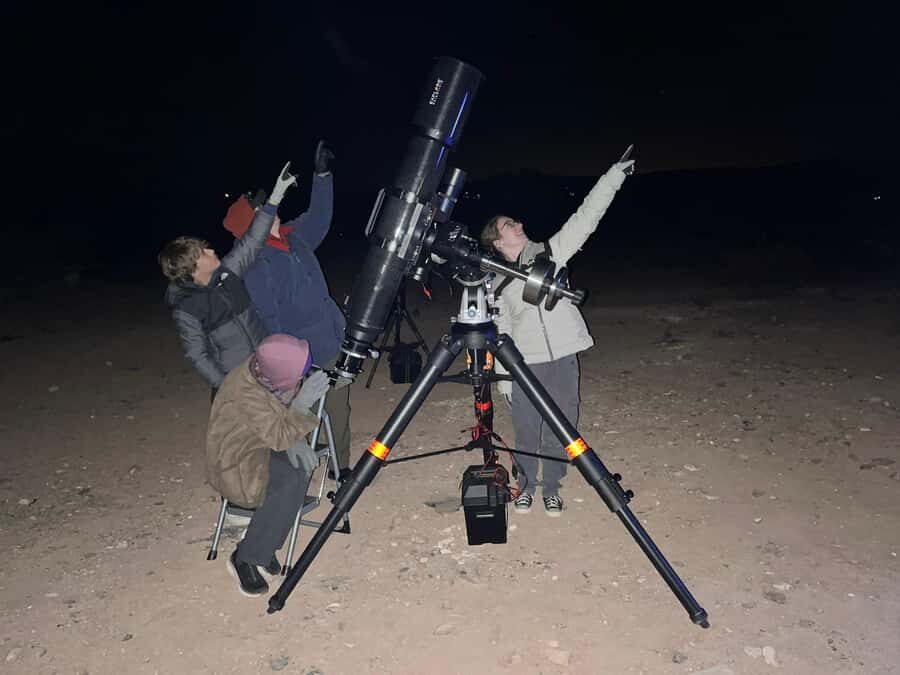
The schedule is designed to feel like a guided “ladder” up into space. You don’t start with the hardest targets. You start with what you can recognize.
First comes the constellation tour. Your astronomer traces star patterns with a laser while sharing names and stories behind the shapes. Along the way, you also get real-time pointers for what might be visible that night, like planets, the Milky Way, meteors, and even passing artificial satellites. This part is about orientation—getting your bearings fast so the later telescope time makes sense.
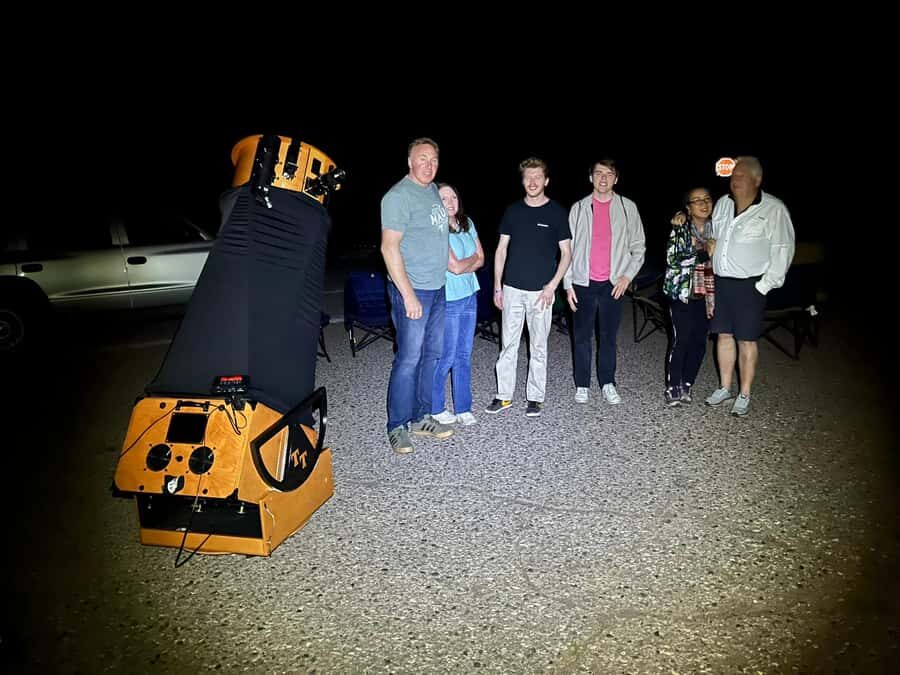
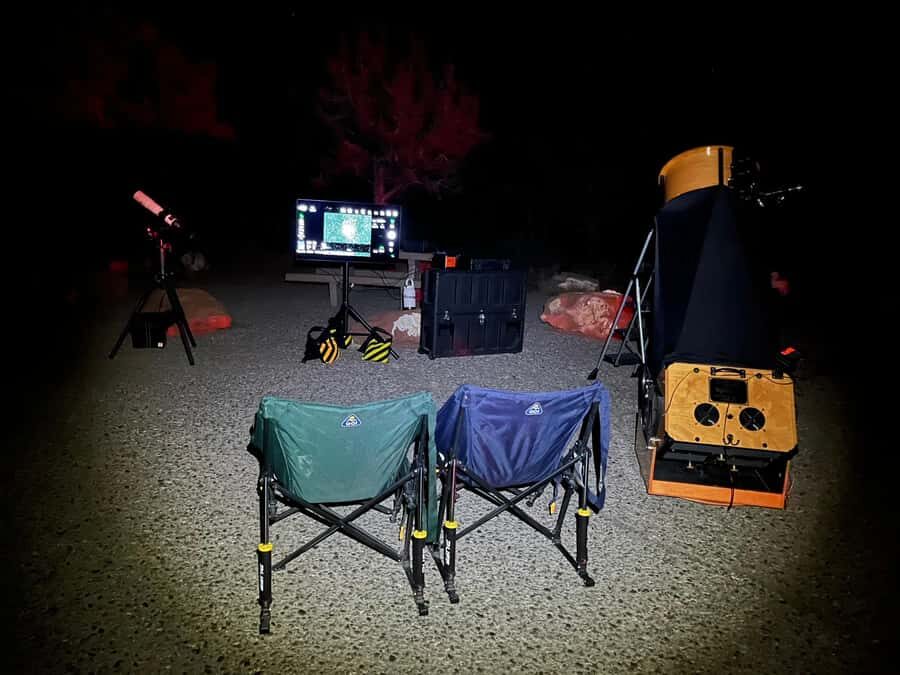
Next you move to the “zoom in” phase. You’ll spend time with big telescopes, but the method changes depending on what you’re targeting. For brighter objects, you use high-quality eyepieces for visual viewing. For very faint deep-sky objects, the tour switches to electronically assisted astronomy (EAA), where special cameras stream live views to a 4K OLED TV.
This pacing is smart. It prevents the common stargazing letdown where everyone stares at something barely visible and nobody knows if they’re missing it.
Constellations with a laser: how the tour teaches you to see
Most stargazing tours stop at the equipment. This one spends time on the sky itself, which is what turns one night into a skill you can reuse later.
During the constellation section, the guide uses a laser to outline the star patterns, then adds the mythic stories connected to each constellation. You also get practical wayfinding: where to look and what to watch for as the sky shifts. That means when a recognizable shape appears, it feels less random. It feels like a map coming to life.
This is also where you’ll often notice smaller “bonus” moments. Depending on conditions, you may catch meteors or spot planets. You might even see satellites passing through. Even if you don’t, this opening phase gives you a framework, so later telescope views aren’t just science facts—they’re part of a connected sky picture.
Big telescopes and the visual targets you’ll actually enjoy
Once you start using the telescopes, the tour switches to objects where visual observing really shines.
With visual eyepieces, you can expect views like:
- the Moon
- planets
- double stars
- brighter deep-sky objects
These targets tend to reward patience. The Moon shows texture. Planets can look like crisp little worlds when conditions are steady. Double stars are great for learning the difference between “a dot” and two close points that your brain can start to separate with time.
This is the part where a tour guide matters. You’re not just handed an eyepiece—you’re guided on what to look for and how to adjust attention. In the reviews, people also highlighted how Chris stays light and fun while swapping eyepieces, which helps when you’re standing still in the cold and waiting for the view to settle.
Video astronomy on a 4K OLED TV: EAA explained simply
Here’s the technology that makes this tour feel modern instead of old-school. Some deep-sky objects are too faint to see well through even large telescopes using the human eye. For those targets, the tour uses electronically assisted astronomy (EAA).
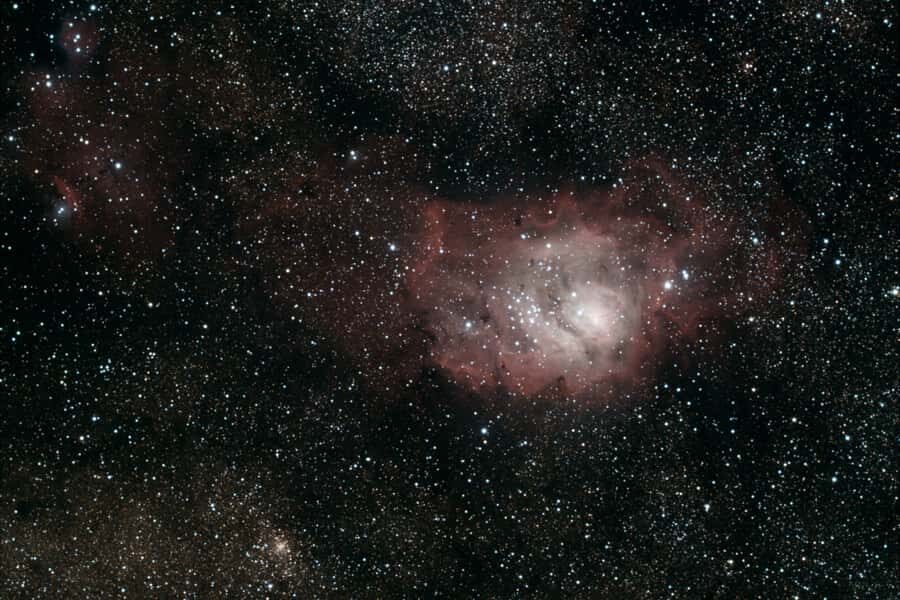
In plain terms: sensitive cameras capture the faint light, and then you see the results live on a 4K OLED screen. That means your view is not just bigger—it’s different. You’re using equipment that is far more sensitive to light than the human eye.
The tour description points to the kinds of images you can see through this method:
- the pinkish red hydrogen glow from stellar nurseries
- colorful remnants of dead suns
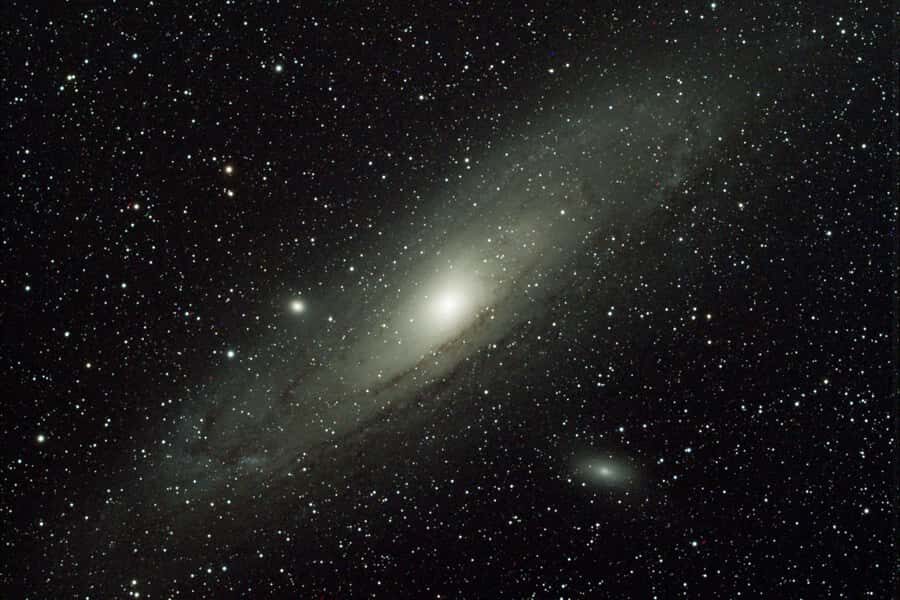
- the shimmering bluish veil of dust around the Pleiades star cluster
- dust lanes in distant galaxies
This is where many people feel the biggest “wow” shift. When the TV shows color and structure in objects that are otherwise invisible to you, it turns stargazing into something close to watching the sky change on command.
Comfort and cold-weather reality: bring layers and expect night chill
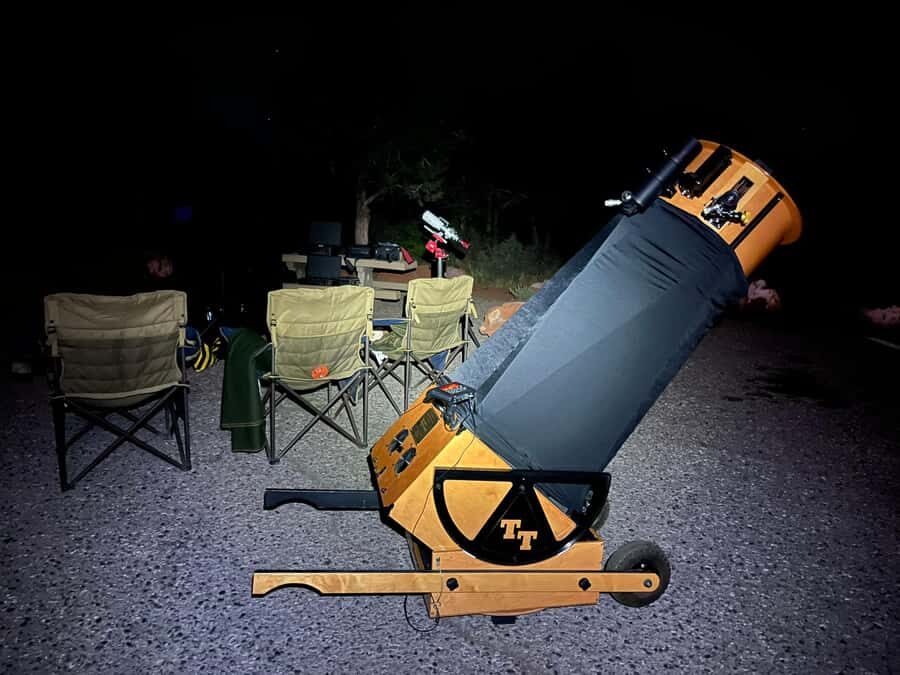
A 90-minute outdoor night in Sedona can cool fast, even when the daytime feels comfortable. The good news: the tour includes padded chairs and blankets, so you’re not just freezing while you wait for your next view.
Still, you’ll want to dress like it’s about to be a long pause. The tour recommends:
- warm clothing, jacket, and long sleeves
- long pants
- closed-toe shoes and warm shoes
If you get cold easily, this is where you win by over-preparing. One review also suggested bringing something like hot chocolate in a thermos, and honestly, it’s the kind of move that makes the experience more pleasant without changing anything about the stargazing itself.
Also note the rules: smoking and vaping are not allowed, and alcohol and drugs aren’t allowed either. That helps keep the viewing space comfortable and reduces distractions during the night.
What I’d watch for: weather, clear skies, and timing
Stargazing is weather-dependent. The tour can be canceled due to cloudy conditions, or if conditions get dangerous (storms, flood warnings, or dangerously high winds). That’s not a marketing trick—it’s how astronomy works. If the sky can’t be seen clearly, telescopes and cameras both lose.
Timing matters too, because you’re meeting at a dark site near Sedona, then moving through the observing sequence as the night unfolds. You’ll start with the constellation tour and then shift into telescope viewing. Plan to arrive with enough buffer so you’re not stressed about finding the location at night.
One very specific tip from a review: GPS can be spotty near the final right turn, and signage may be minimal. When you get your meetup instructions, treat them like the main event. Save them offline, and try to confirm the route before you’re already outside in the dark.
Price and value: what $125 buys you in the real world
$125 per person for a 90-minute tour is not a bargain price, but it also isn’t just you and a telescope on a hill. You’re paying for:
- astronomer-guided observing (the real value is knowing what to aim for and how to interpret the view)
- access to dark-sky forest land under a USFS permit
- premium large aperture telescopes
- state-of-the-art video astronomy rigs and a 4K OLED screen setup
- the “two-mode” system (visual plus EAA) that expands what you can actually see
If your goal is a basic stargaze—point at the sky and hope you recognize constellations—then this might feel like overkill. But if you want both learning and real views of planets and faint deep-sky objects, the mix of visual observing and EAA is what justifies the cost.
Think of it as guided astronomy education plus high-end equipment time. And because you’re seeing a Moon/planet side plus a nebula/galaxy side, you’re using the whole session rather than spending most of it waiting for something that’s barely visible.
Who this tour fits best (and who should skip)
This experience is designed for a wide range of people: families, couples, and anyone curious about the universe. It’s described as child-friendly, but with a clear minimum age.
It’s not suitable for:
- children under 7
- wheelchair users or people with mobility impairments
- people over 300 lbs (136 kg)
Also, because it’s outdoors at night, uneven terrain can be part of the deal. If you don’t want to navigate dark ground with limited visibility, you’ll probably feel better choosing a different sort of daytime attraction.
If you’re the type who likes learning as much as looking—constellation stories, what you’re seeing, and Q&A—this tour is a strong fit. Reviews also mention that Chris’s style keeps the experience light and fun, which matters when you’re standing still long enough for your brain to switch from daylight mode to sky mode.
A few practical pointers before you go
If you want this to feel smooth from start to finish, plan around the realities that astronomy tours run on.
- Wear warm layers and closed-toe shoes, not fashion sneakers you regret later.
- Bring something to warm up if you get cold (the tour provides blankets, but your comfort is personal).
- Expect the route to be handled via the specific directions you receive after booking, not generic GPS.
- Arrange your ride plan early, since it can be hard to find a driver late at night.
- Go on nights when you can hope for clear conditions. You can’t control the weather, but you can control your flexibility.
And when you’re at the site, lean into the guide’s pacing. The tour works best when you follow along during the constellation phase and then stay patient during the telescope swaps.
Should you book Night Owl Tours in Sedona?
If you want a stargazing night that includes real learning, real equipment, and real visibility of faint objects, I’d book this. The standout advantage is the combination of visual telescopes and video astronomy on a 4K OLED screen, which lets you see more than just bright stars.
Skip it if you need wheelchair-friendly ground access, have trouble negotiating uneven terrain at night, or you’re expecting a short, easy walk-and-look experience with no effort at all. Also, if you’re not comfortable handling your own transportation to a dark-sky site, plan that part first.
Bottom line: for $125 and 90 minutes, you’re buying a guided sky lesson plus modern imaging. If the forecast doesn’t cooperate, you may lose the night to clouds or wind, but on a clear evening, this is the kind of Sedona tour that makes the sky feel close enough to touch.
FAQ
How long is the stargazing tour?
It lasts 90 minutes.
What is the price per person?
The price is $125 per person.
Where do we meet?
You meet your astronomer at a prearranged dark sky site near Sedona. The exact location can vary seasonally, and you’ll receive full meetup instructions after confirmation. All sites are within about a half hour drive of Uptown Sedona.
Do I need to bring transportation?
Yes. Transportation to and from the dark sky site is not included. You’ll need access to a vehicle or secure a tax/ride-share service.
What should I bring for the night?
Bring warm clothing such as a jacket, long-sleeved shirt, long pants, and closed-toe warm shoes.
What happens if the weather is cloudy?
Stargazing requires clear conditions. The tour may be canceled due to cloudy weather, or for dangerous conditions like storms, flood warnings, or dangerously high winds.
Is the tour good for kids?
It’s not suitable for children under 7 years old, but it is described as child-friendly for older kids.
Does the tour include telescopes and video astronomy?
Yes. You’ll use premium large aperture telescopes, and for faint deep-sky objects you’ll use video astronomy with live views streamed to a 4K OLED TV.