REVIEW · UTAH
Zion and Bryce Canyon National Parks Self-Driving Bundle Tour
Book on Viator →Operated by Travel with Action · Bookable on Viator
Utah feels like a giant outdoor museum. This bundle lets you pace yourself through Zion and Bryce Canyon while a GPS-synced audio guide explains what you’re seeing, point by point.
I especially like the offline setup, because signal can get spotty in these parks. I also like how the audio plays on its own as you move, so you’re not stuck constantly tapping your screen.
The main catch: you’ll need to set up the app correctly and download the tour on strong Wi‑Fi or cellular before you go. If you don’t, you can end up with a laggy or glitchy experience—and that’s the opposite of what you want on mountain roads.
In This Review
- Key points
- Offline Audio That Actually Works on Utah Roads
- Bryce Canyon Drive: Hoodoos, People, Glaciers, and Night Skies
- Bryce Canyon Visitor Center: the namesake and the first residents
- Fairyland Point and Sunrise Point: the classic photo-to-understanding jump
- Around the Bryce Amphitheater: Blackbird, reds, and the science of hoodoos
- Paria View to Farview Point: glacier effects and the oldest trees
- Natural Bridge to Bryce Canyon Road: wildlife survival and local rock characters
- Ponderosa Canyon to Rainbow Point: from junipers to the Grand Staircase
- Red Canyon and the road-made arches
- Zion Canyon and East Zion: Water, Tunnel Rules, and Big Names
- Start easy: Pa’rus Trail and Watchman Trail quick hits
- Canyon Junction Bridge: the sunset stop with parking if you can
- Zion Canyon Scenic Drive: Court of the Patriarchs
- East Temple and the tunnel: short stops with big meaning
- Altar of Sacrifice and Checkerboard Mesa: red streaks and grid lines
- Where the drive ends: East Ranger Station
- How Long Should You Plan for Zion and Bryce?
- Price and Value: $24.99 Per Car With Lifetime Access
- The App Setup: The Step That Makes or Breaks the Day
- Who This Bundle Fits Best (and Who Might Want Something Else)
- Should You Book This Zion and Bryce Canyon Self-Driving Audio Bundle?
- FAQ
- FAQ
- Do I need park entry tickets for Zion and Bryce?
- Does the audio work offline?
- Do I need to download the tour before I get to the parks?
- How does the audio start while driving?
- Can I use it in a car and on foot?
- Is this priced per person?
- How long is each park portion?
Key points
- Offline maps and audio so you can keep moving even with limited service
- Location-triggered storytelling that starts and moves with your drive
- Two iconic parks, one bundle with a strong mix of geology, people, and survival tips
- A value-priced format: $24.99 per group up to 4, not per person
- Built for hands-free touring with car audio options like Bluetooth, USB, AUX, and CarPlay
- Zion timing matters: private driving rules can apply seasonally, but the audio is designed to work with the Zion shuttle in March to September
Offline Audio That Actually Works on Utah Roads
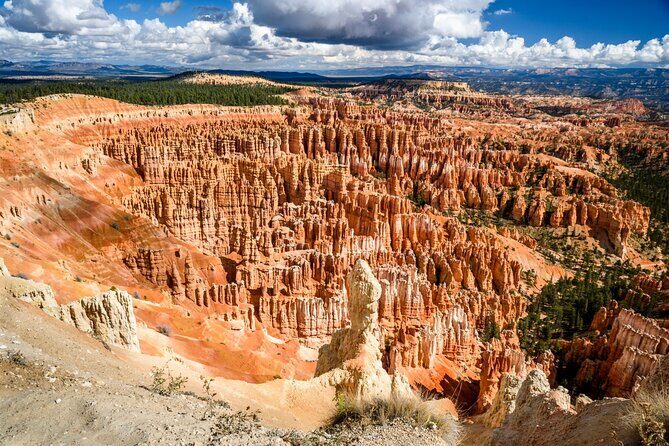
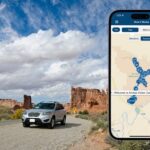
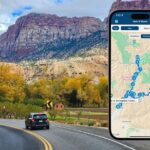
This is a self-driving bundle with a simple idea: you drive your own route at your own rhythm, and the audio guide keeps time with your location. That means you can pause for photos, park for a short walk, or skip a stop you don’t care about without losing your place.
The offline part is the real win here. Zion and Bryce aren’t just pretty; they’re remote enough that cell coverage can be inconsistent. The tour is designed so you download everything first, then use it without cellular or Wi‑Fi once you’re inside the parks.
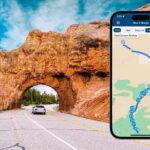
For audio, you can run the narration through your car stereo using Bluetooth, USB, or AUX. If you’re getting out to walk between overlooks, headphones can help you keep the audio clear when wind and car noise rise.
You can also read our reviews of more tours and experiences in Utah.
Bryce Canyon Drive: Hoodoos, People, Glaciers, and Night Skies

Plan on this as a full-on scenic loop. Each Bryce leg is about 20+ miles and usually takes around 2–3 hours if you drive with stops. You’ll get a drive-through version of the park, focused on the viewpoints that give you the best “show me the hoodoos” views without long hikes.
Bryce Canyon Visitor Center: the namesake and the first residents
You start just before the Visitor Center area, where the tour frames Bryce Canyon’s origin and namesake. You’ll also hear about the Paiute people who lived here, including how they understood the land.
Even if you’re already familiar with Bryce’s fame, this opening story helps you look in the right direction. It sets you up to connect the shapes you see—especially the hoodoos—to time, erosion, and human presence.
Fairyland Point and Sunrise Point: the classic photo-to-understanding jump
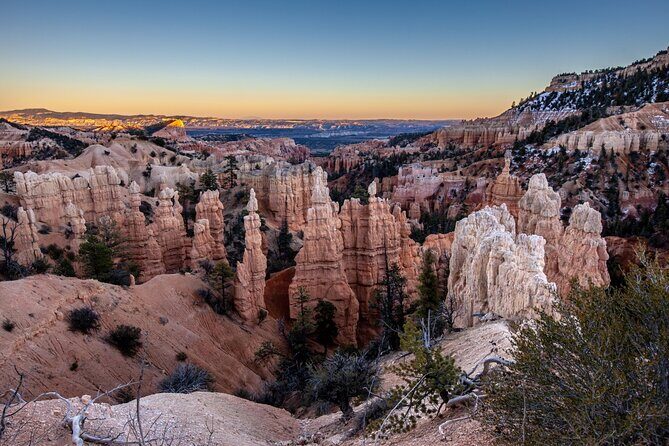
Fairyland Point is your first “wow” detour. It’s a tight stop with a wide payoff: sweeping vistas, steep cliffs, and those famous hoodoo formations.
Then Sunrise Point brings in the park’s signature amphitheater view. The narration ties what you’re seeing to natural trails and the way the basin opens up—so you’re not just collecting photos. You’re also learning which directions matter when you’re planning a short walk vs. a pure overlook day.
A drawback here: if you’re short on time, these early stops can suck up minutes fast because the views are so photogenic. Build in a calm pace.
Around the Bryce Amphitheater: Blackbird, reds, and the science of hoodoos
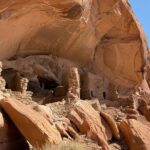
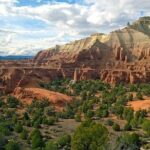
As you circle the Bryce Amphitheatre area, the tour keeps your attention on the geology behind the scenery. You’ll hit Sunset Point to learn about how hoodoos form and why erosion works on such extreme timescales. That’s a powerful change from the usual “look at that rock” commentary.
In the middle stretch, Inspiration Point and Bryce Point add a people-and-faith thread. You’ll hear Paiute mythologies and then also learn about Mormon settlers after the Paiute, including how they tried to live through a harsh climate.
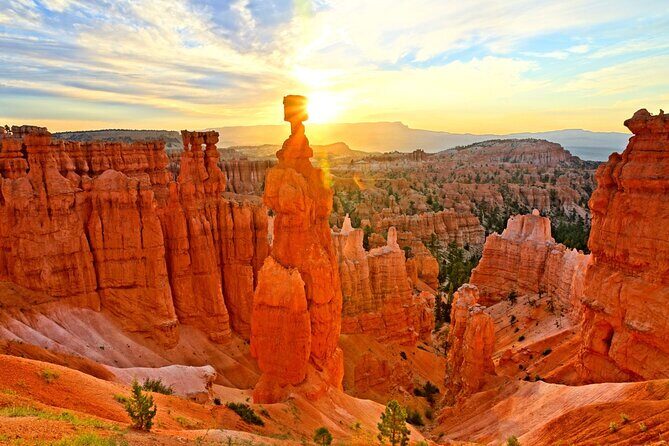
If you’re wondering when to get your best light, Bryce Point is key. The narration specifically calls out the way early sun hits the hoodoos’ tops and how the orange light spreads across shadows.

Paria View to Farview Point: glacier effects and the oldest trees
Paria View is a quick stop that adds a giant timescale to the drive: the end of the last ice age and the idea that water from melting glaciers had to go somewhere—down the canyon. It’s only a few minutes, but the story makes the canyon feel connected to what happened thousands of years ago.
Farview Point shifts the focus to clean air and bristlecone pines. The tour highlights that bristlecone pines are among the oldest trees, which turns an overlook stop into something more memorable than just elevation.
Natural Bridge to Bryce Canyon Road: wildlife survival and local rock characters
Natural Bridge adds another formation surprise, so you’re not only seeing hoodoos. Then Bryce Canyon Road points out two hoodoos described as The Hunter and The Rabbit—names that don’t match what you’d expect from their shapes, which is exactly what makes it fun to learn and re-look.
The narration also covers wildlife survival tactics in Bryce’s extremes—scorching summers and deeply freezing winters. It’s short but useful, especially if you’re planning a quick walk after you park.
Ponderosa Canyon to Rainbow Point: from junipers to the Grand Staircase
Ponderosa Point gives you a view of junipers stretching out into the distance and pushes the driving loop toward deeper recesses of the park.
Black Birch Canyon shifts to the night-sky side. If stargazing is on your Utah checklist, this stop is built around the idea that Bryce’s night views are unmatched.
Finally, Rainbow Point rounds out the farthest overlooks inside Bryce with a mega view. The tour also connects Bryce to the broader Grand Staircase idea, describing it as a geologic structure stepping down across states.
Red Canyon and the road-made arches
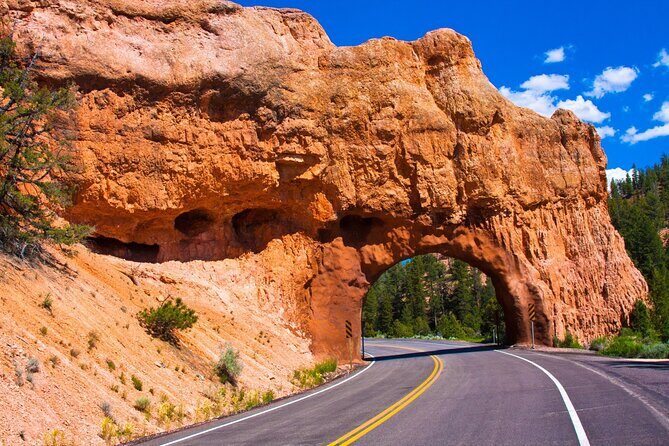
Near the end, you’ll see Red Canyon arches described as rock altered by humans. The narration notes that road workers tunneled through solid rock in 1914 to make room for the road, and those shapes have since become part of the park’s story.
This is a nice reminder that national parks aren’t frozen in time. Even when humans change the route, the land keeps turning into something you want to study.
Zion Canyon and East Zion: Water, Tunnel Rules, and Big Names
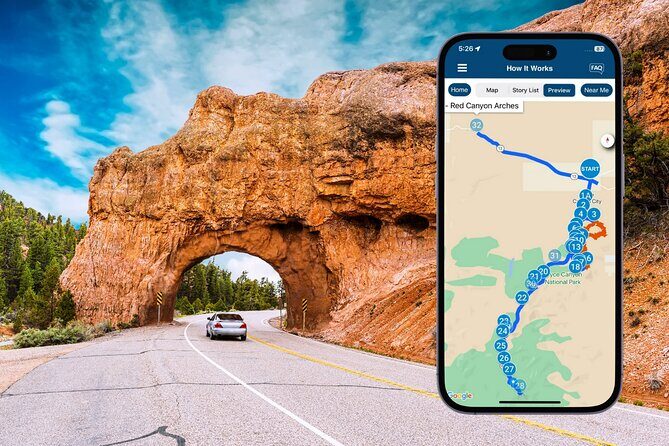
Zion’s part of the bundle is where the tour earns its keep if you’re doing a one-day plan. This leg is designed around the areas you can reach by road and quick walks, with strong context for what’s around the next turn.
Start easy: Pa’rus Trail and Watchman Trail quick hits
After entering the park, you’ll be pointed toward Pa’rus Trail before a bridge and Watchman Trail just after. These are popular for views without turning the day into a full hiking project.
The tour framing matters here: it’s not only telling you where to go. It’s also teaching you what to notice as you approach the viewpoints.
Canyon Junction Bridge: the sunset stop with parking if you can
You’ll roll into Canyon Junction Bridge, flagged as a great sunset spot. It also connects you to Watchman views, plus the road split that determines how you experience Zion.
Here’s your practical takeaway: if you want Narrows, Angel’s Landing, or Emerald Pools, the tour tells you to turn left toward the Scenic Road direction. If you don’t care about those, you can keep your day focused and avoid driving extra loops you don’t need.
Zion Canyon Scenic Drive: Court of the Patriarchs
On the Zion Canyon Scenic Drive, you’ll learn about the Court of the Patriarchs: Abraham, Isaac, and Jacob. That’s not just trivia. It gives you an easy way to orient your eyes on the peaks as you drive.
Then the narration ties the scenery to water. Zion Canyon’s main story includes the Virgin River and the Emerald Pools area, where waterfalls and a hanging garden show up along the river path.
East Temple and the tunnel: short stops with big meaning
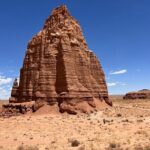
East Temple is described as a 1,700-foot summit, and the tour points out why cliffs can show multiple colors: rock from different eras. It’s a quick stop that makes the geology feel readable instead of random.
Next comes the Zion-Mount Carmel Tunnel. The tour warns you to use your headlights inside and says stopping for photos is prohibited. That one detail can save you from a frustrating pull-over moment.
Altar of Sacrifice and Checkerboard Mesa: red streaks and grid lines
The Altar of Sacrifice gets a story about rusty red streaks that early Mormon pioneers associated with blood. The tour also gives the less dramatic explanation, which is a good reminder: context turns a color into something you can understand.
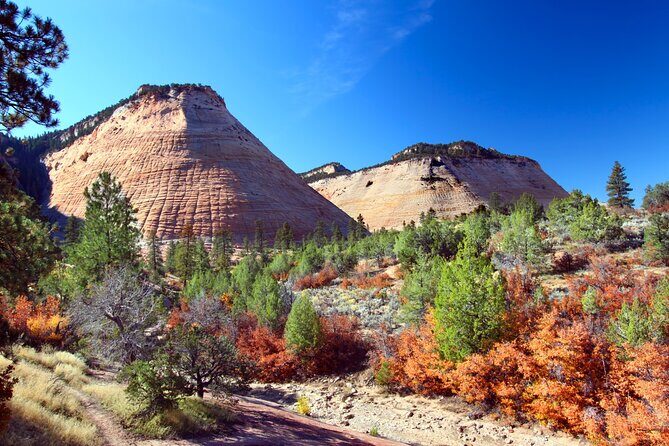
Then Checkerboard Mesa appears with its grid of criss-crossed lines. It’s the kind of visual that makes you stop anyway, but the audio helps you name what you’re actually seeing.
Where the drive ends: East Ranger Station
Your Zion audio loop finishes at the East Ranger Station. The takeaway is the same as Bryce: the land is still being shaped, and people keep leaving stories—through names, survival choices, and road systems.
One key consideration: Zion driving rules can limit access by private vehicle during certain seasons. The bundle is set up so you can still get value if you’re using the Zion shuttle in March through September.
How Long Should You Plan for Zion and Bryce?
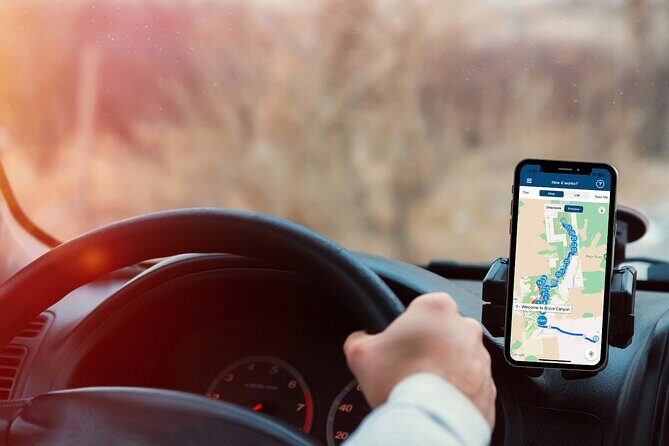
If you want a smooth day, treat each park leg as a slow drive with intentional stops. Each park’s audio route is designed for about 2–3 hours per self-guided loop, with each loop running over 20 miles.
In total, the bundle commonly fits an 8–9 hour rhythm. That usually means: one park as a half day plus the other park as a half day, or splitting Bryce and Zion across two days.
You’ll get more enjoyment if you don’t pack your calendar too tight. Utah sun and altitude do not care about your schedule.
Practical note: the narration itself gives strong basic safety reminders. Bring lots of water, expect the heat to feel harsher than you think, and don’t overtax yourself hiking at elevation.
Price and Value: $24.99 Per Car With Lifetime Access
At $24.99 per group up to 4, this is priced for real-world road trips. You’re paying for a full-day experience format: the audio route plus offline maps plus a lifetime license that you can reuse.
That lifetime access point matters. Zion and Bryce are places you may revisit because the light changes everything. A one-time paid tour that expires would be easier to shrug off. This doesn’t make you feel rushed.
It’s also a different value model than bus or guided tours because you’re not paying per person. If you’ve got a car with a couple friends or family members, the math gets even friendlier.
Just remember: park entry tickets are not included. You’ll still need the right park pass for Zion and Bryce to match the stops you make.
The App Setup: The Step That Makes or Breaks the Day
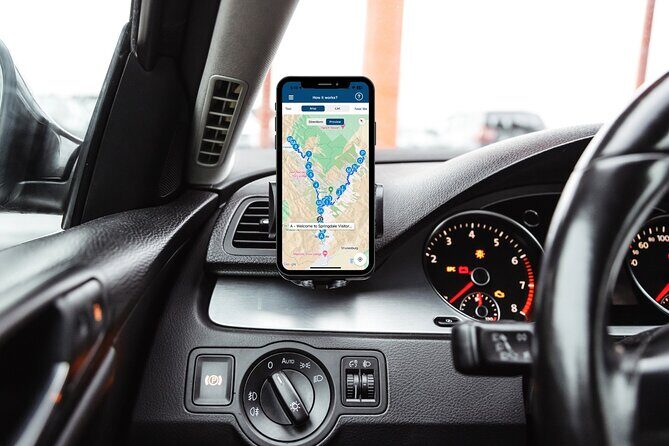
This is where you should spend five extra minutes before you start driving.
You’ll get a link and a password by email and text after booking. You’ll need to download the separate Action audio tour app, enter the password, then make sure the tour downloads while you’re on strong Wi‑Fi or cellular.
After download, it should work offline. But if the tour isn’t fully saved, playback issues can happen—audio freezing, icons disappearing, or the app looping you back to an odd spot.
Another small but real tip: you’ll want to start at the correct starting location. One common failure point is starting on the wrong side of the route. For Bryce, the tour start is described with a specific plus code near Bryce Canyon City, so match your app’s starting screen before you begin.
If audio doesn’t behave, the product includes support help and tutorial videos inside the system. Still, your best protection is doing the download properly before you reach the remote areas.
Who This Bundle Fits Best (and Who Might Want Something Else)
This bundle fits best when you want two things at once: freedom and context.
I’d recommend it if you:
- like driving scenic routes and making short stops instead of committing to long hikes
- want geology and people stories without hiring a guide for every viewpoint
- value offline maps and hands-free narration
- plan to revisit parks later, since the access is lifetime
You might hesitate if you:
- need zero tech steps, because you must download and set up the app correctly
- are very sensitive to any audio glitches and you don’t like troubleshooting
- plan to be in Zion during seasonal periods when private vehicle access is limited, and you don’t want to deal with shuttle logistics
Should You Book This Zion and Bryce Canyon Self-Driving Audio Bundle?
Book it if you want a low-stress way to understand what you’re driving past. This is a strong fit for people who like scenic viewpoints and short walks, and it’s built to work even when signal drops out.
Don’t book it if you’re hoping to simply park at random and have the app magically find your perfect route without setup. You’ll get the best results when you download on good connection, start from the correct starting point, and let the audio guide your stops.
One more decision helper: with 4.1 out of 5 from 63 ratings on the main platform, you’re in solid territory, but the lower scores cluster around setup and start-point confusion. That’s fixable, as long as you treat setup as part of the trip, not an afterthought.
FAQ
FAQ
Do I need park entry tickets for Zion and Bryce?
Yes. Entry tickets to Zion and Bryce Canyon are not included in this bundle, so you’ll need to arrange the park passes yourself.
Does the audio work offline?
Yes. Offline maps are included, and the tour is designed to work without cellular or Wi‑Fi after you download it.
Do I need to download the tour before I get to the parks?
You must download the tour while you’re on strong Wi‑Fi or cellular. After download, it should work offline.
How does the audio start while driving?
You open the Action audio tour app once onsite, launch the correct tour version, then go to the first story’s point. Audio cues should play automatically based on your location.
Can I use it in a car and on foot?
Yes. You can connect your phone to your car stereo using Bluetooth, USB, or AUX for driving, and headphones can help during short walks.
Is this priced per person?
No. It’s priced per group (up to 4), so the price is per car rather than per person.
How long is each park portion?
Each park self-guided drive is described as about 2–3 hours per tour, and each route is over 20 miles.